
Charging
Charging you don't have to think about.
Veltrix builds and operates its own charging network rather than reselling someone else's. Every site is monitored from Detroit, every stall reports its own health, and any stall that fails twice in a week is taken offline until a technician has been to it.
1,840
Stalls in operation
312
Sites across 41 states
99.2%
Rolling 12-month stall uptime
350 kW
Peak site output
The network
Three kinds of stall, for three kinds of stop.
Corridor charging is sized for minutes, destination charging for hours, and AC charging for overnight. Every site is built and maintained by Veltrix.
350 kW
Current 350
Highway corridor charging
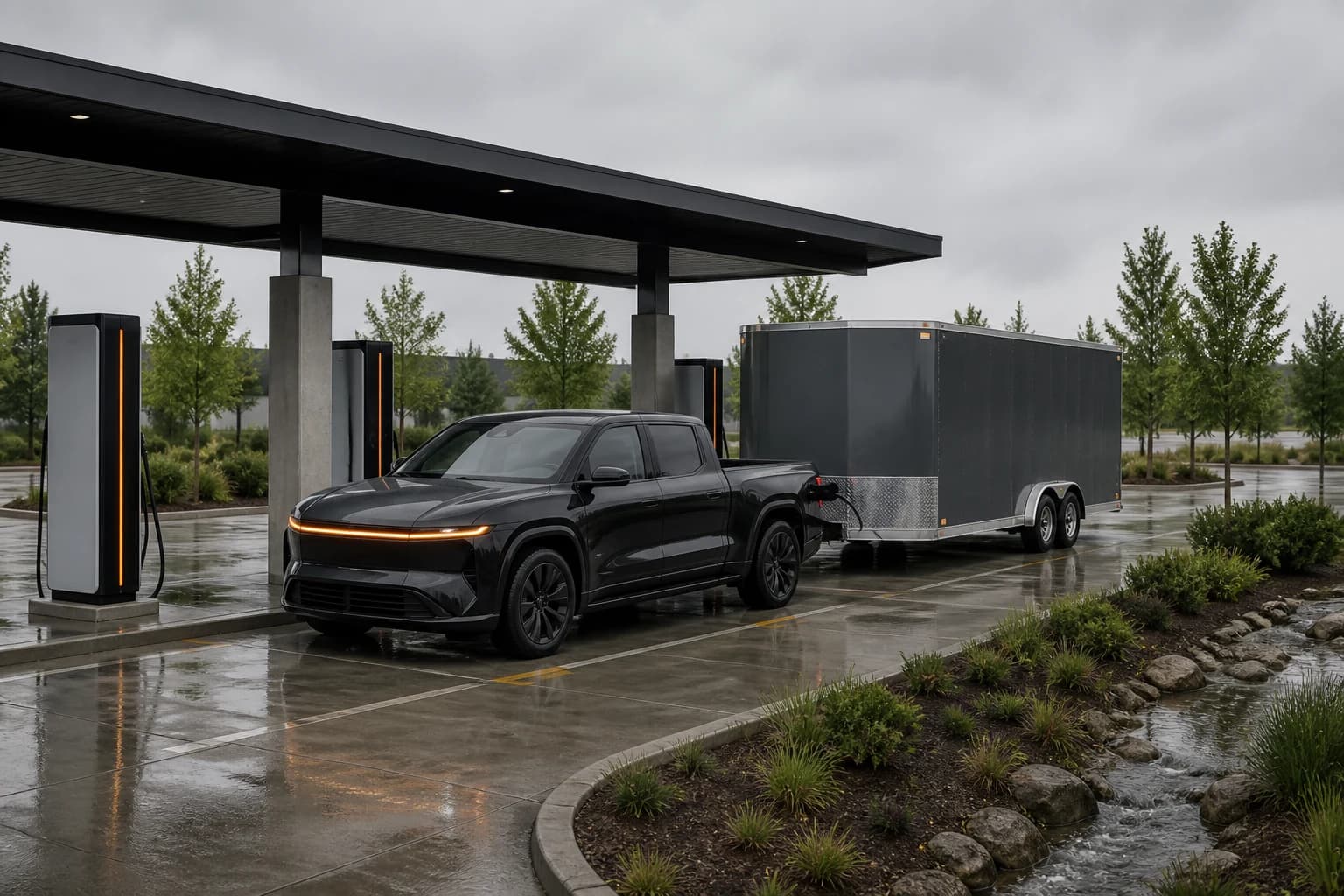
Liquid-cooled cable, pull-through bays sized for a Ridge with a trailer attached, and a canopy at every site. Located within two miles of an interstate exit.
Up to 224 miles in 19 minutes on an Arcen
150 kW
Current 150
Destination and urban charging
Sited at Experience Centers, hotels and city parking structures. Sized for a stop measured in hours rather than minutes.
Up to 148 miles in 45 minutes on a Korrin
22 kW AC
Current 22
Overnight and workplace
AC charging for long dwell times, including a fleet configuration with per-vehicle billing for businesses running multiple Ridges.
A full charge overnight on any vehicle in the range
Charging performance
What each vehicle actually does.
Measured at 50°F ambient from a 20 percent state of charge on a Current 350 stall. Cold packs charge more slowly — navigate to a site and the vehicle preconditions on the way.
| Vehicle | Peak rate | 10–80% | Added in 10 min |
|---|---|---|---|
| Nyra | 145 kW | 24 min | 97 mi |
| Arcen | 265 kW | 19 min | 158 mi |
| Korrin | 230 kW | 21 min | 132 mi |
| Vantor | 310 kW | 18 min | 164 mi |
| Torren GT | 320 kW | 17 min | 171 mi |
| Ridge | 300 kW | 20 min | 119 mi |
Pricing
One rate, published, no membership required
$0.34 per kWh
Idle fees of $0.50 per minute apply only once a site reaches 75 percent occupancy, and stop the moment you unplug. There is no subscription, no connection fee, and no separate member rate.
Every new Veltrix includes two years of Current membership, which reduces the rate to $0.28 per kWh.
At home
Most charging happens where you sleep.
Standard installation is included with every vehicle ordered for delivery in 2026. Non-standard work is quoted before anything begins.
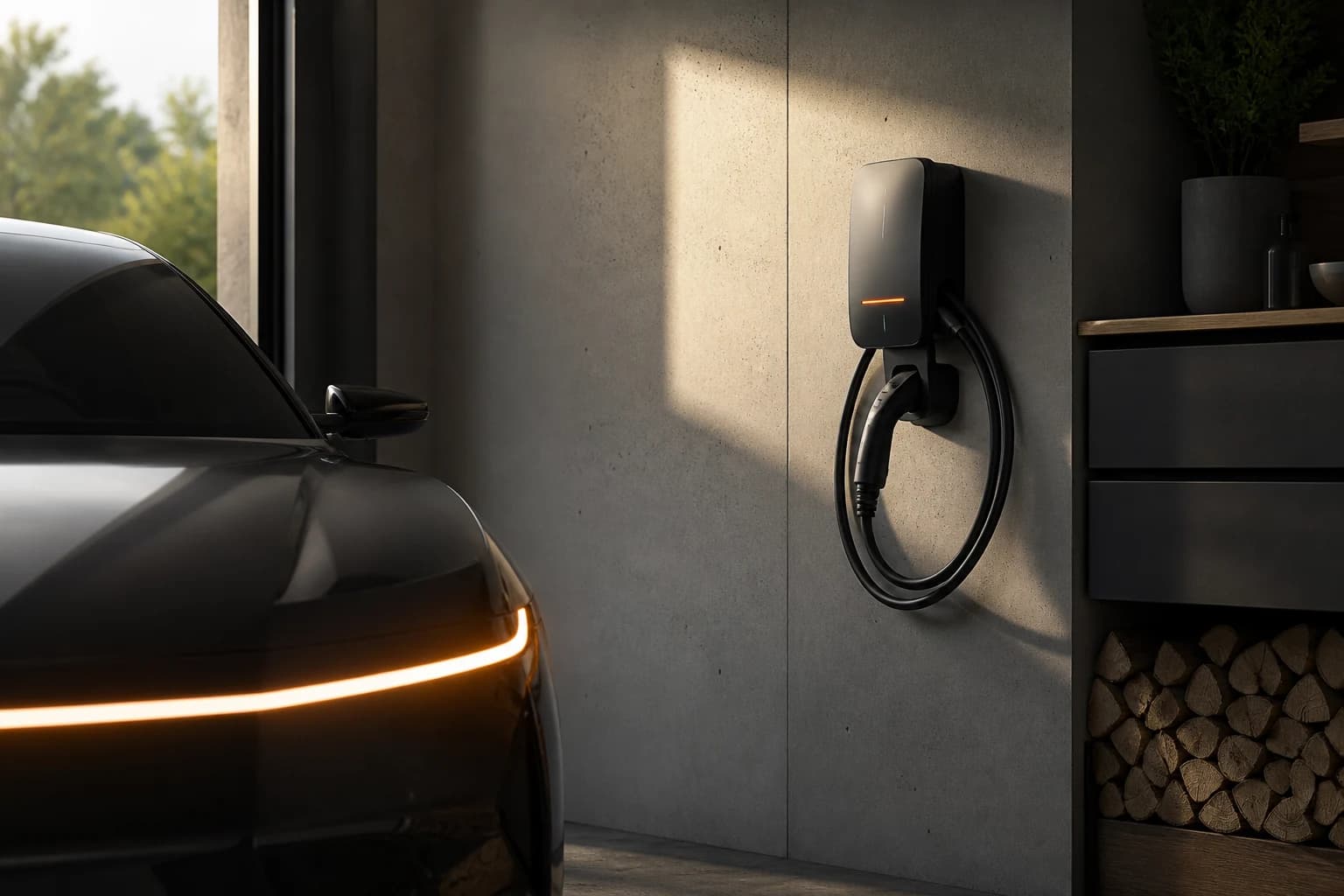
Veltrix Home Charger
$749
11.5 kW
The standard wall unit. Charges any Veltrix overnight on a 60-amp circuit.
- 24-foot cable, rated to −22°F
- Scheduled charging against your utility's off-peak window
- Indoor and outdoor rated
- 3-year hardware warranty
Veltrix Home Charger Plus
$1,290
19.2 kW
For the Vantor, Ridge and Torren GT, or a household charging two vehicles.
- Two-vehicle load sharing on one circuit
- Bidirectional ready — home backup available with the Ridge
- Whole-home load management
- 5-year hardware warranty
Do I need a home charger?
Not strictly — every vehicle ships with a portable cable for a standard outlet — but a standard outlet adds roughly 4 miles of range per hour, which suits a short commute and little else. Standard installation of a Veltrix Home Charger is included with every 2026 delivery.
How much does public charging cost?
$0.34 per kWh at any Veltrix Current site, or $0.28 with Current membership, which is included free for two years with a new vehicle. There is no connection fee and no separate member-only rate structure.
Can I charge at other networks?
Yes. Every Veltrix ships with a CCS connector and works on any CCS network. Route planning includes third-party sites where a Current site is not within range, though it will prefer Current where both are available.
Does fast charging damage the battery?
No. The pack is designed for it, and the 8-year battery warranty guarantees at least 70 percent of original usable capacity regardless of how you charge. Charging to 100 percent daily is worth avoiding; DC fast charging is not.