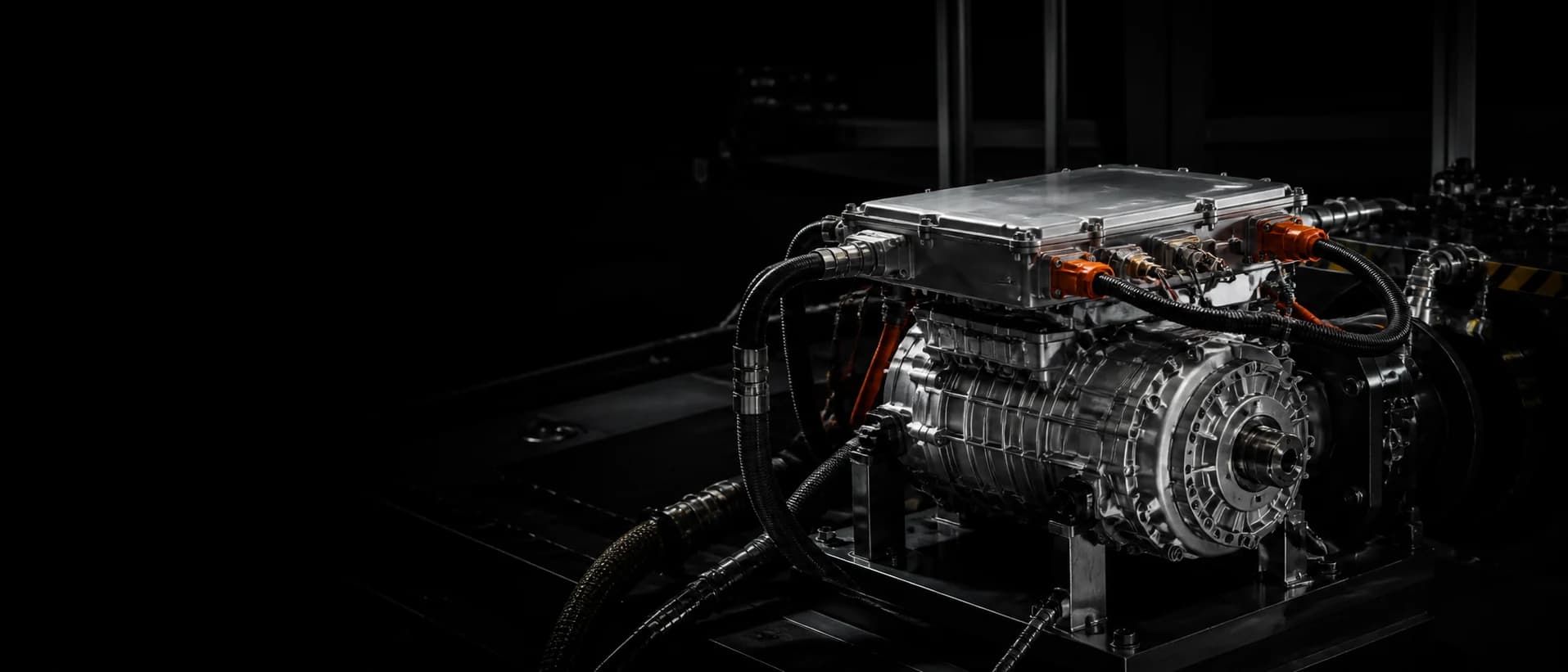
A VLX-800 drive unit and inverter assembly on a test bench under hard directional light

Technology

Everything starts at 800 volts.

Veltrix builds one platform. Doubling the operating voltage halves the current for the same power, which means thinner cable, less heat, less mass, and charging speeds that hold instead of taper. Every decision downstream — motor design, thermal strategy, software — follows from that one choice.

800V

System architecture

320kW

Peak DC charge rate

17min

Fastest 10–80% charge

94%

Pack materials recoverable

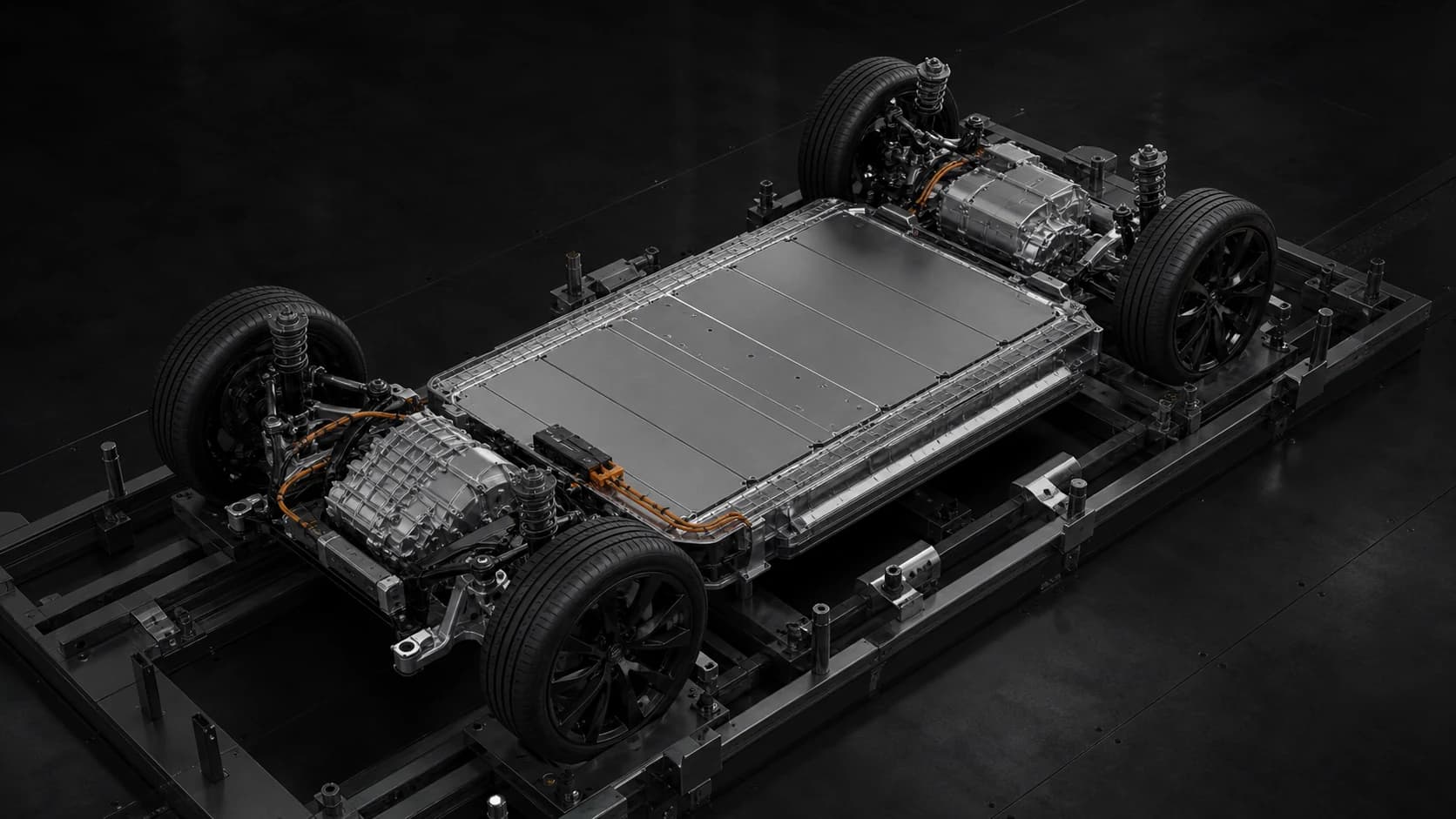
Cutaway view of the VLX-800 skateboard platform showing the structural battery pack between the axles

VLX-800 Platform

One architecture, six vehicles

A compact hatchback and a 9,500-pound-rated pickup share a skateboard floor, a cell format, an inverter family and a thermal loop. The pack scales from 58 to 131 kWh by module count, not by redesign — which is why the smallest vehicle in the range benefits from engineering paid for by the largest.

  • Silicon carbide inverters running at 800 volts across every vehicle
  • Structural pack: the battery case is a load-bearing member of the floor
  • A single coolant loop conditions cells, motors and cabin
  • Modules are individually replaceable — a damaged pack is repaired, not scrapped
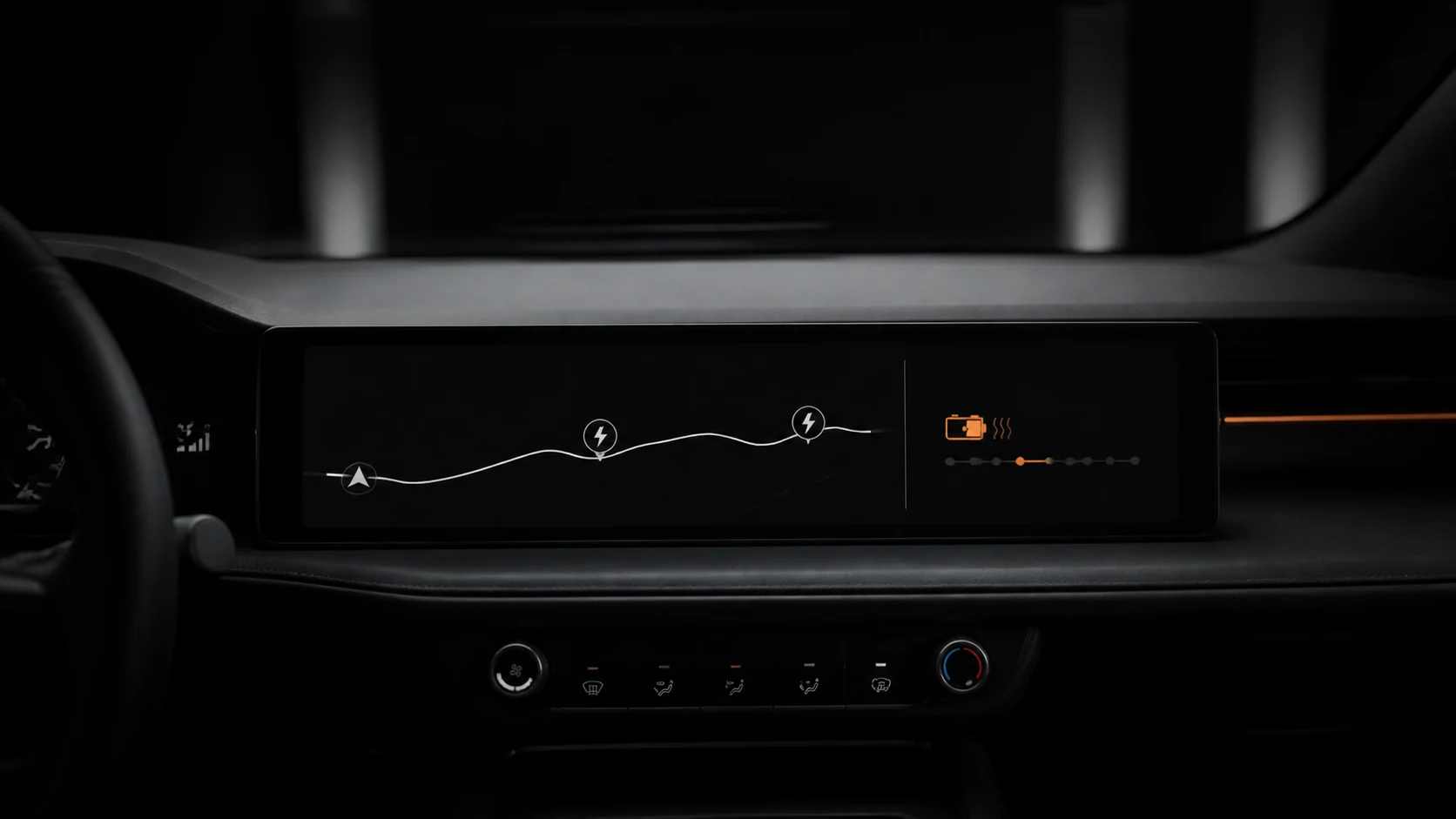
The Halo display showing a planned route with charging stops and battery preconditioning status

Veltrix OS

The same software, every vehicle, the same day

Veltrix OS runs on a single compute module fitted to all six vehicles. Updates ship to the whole fleet simultaneously rather than by model year, and every vehicle sold since 2019 remains on the current release.

  • Halo display, 12.3 or 14.6 inches depending on vehicle
  • Route planning that conditions the battery before arrival at a charger
  • Physical controls retained for drive mode, volume and climate temperature
  • Vehicle data stays on the vehicle unless the owner explicitly shares it
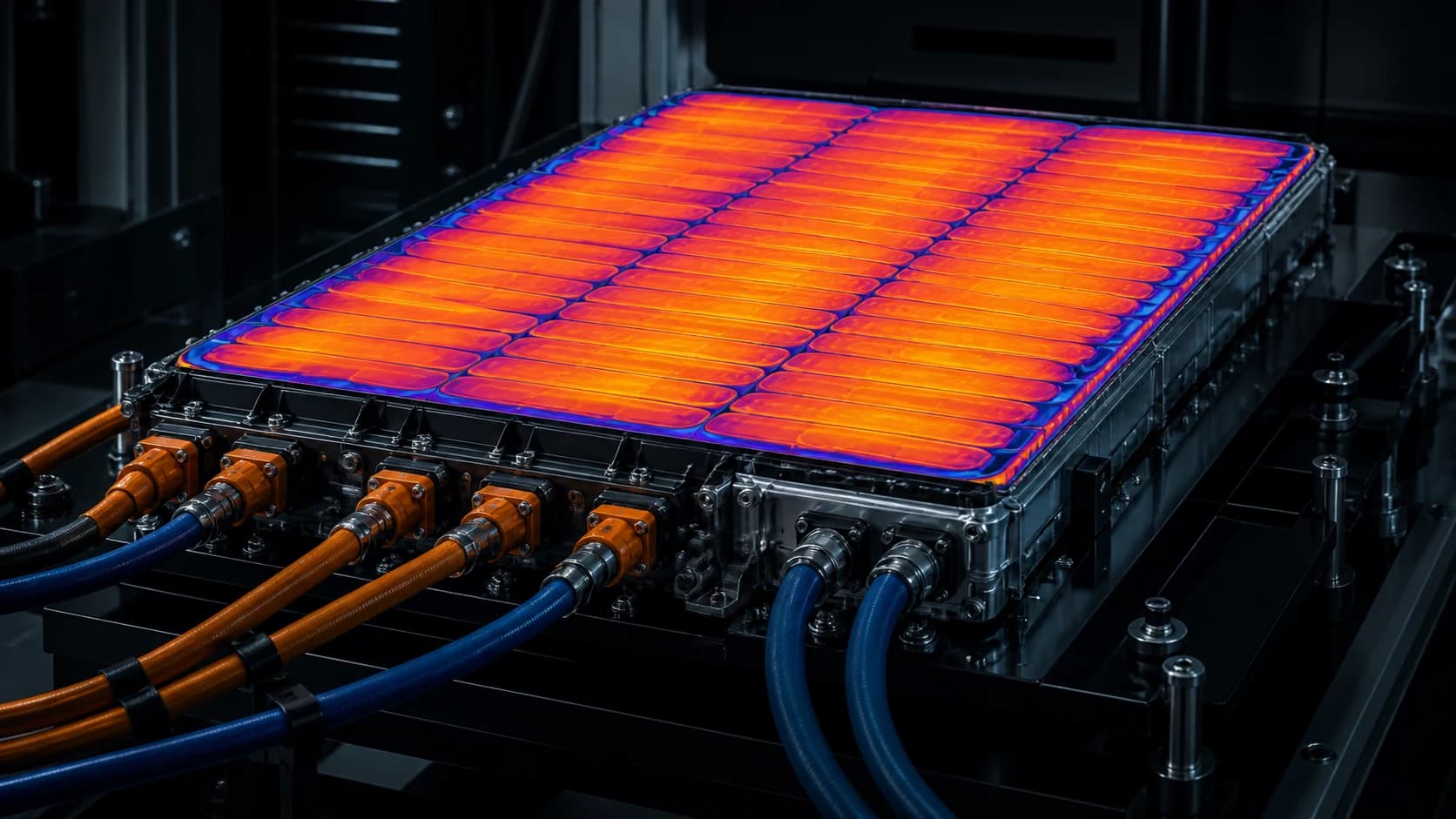
Thermal imaging of a Veltrix battery module during a sustained 320 kilowatt charge

Thermal strategy

Charging speed is a cooling problem

Sustaining 320 kW is not difficult for thirty seconds. Holding it from 10 to 60 percent state of charge is a thermal engineering problem, and it is where most of the platform's development time went.

  • Direct-contact cell cooling on both faces of every module
  • Battery preconditioning begins up to 25 minutes before a navigated charging stop
  • Heat pump standard on every vehicle, not an option package
  • Published charge curves are measured at 50°F ambient with a 20 percent starting charge

Safety

Veltrix Guard

A driver assistance suite that is explicit about what it does and does not do. Veltrix Guard assists a driver who is driving. It is not an autonomous system, and the vehicle will say so if you stop paying attention.

Eight cameras, five radar units

360-degree coverage with overlapping fields of view. Radar operates where cameras fail — heavy rain, direct low sun, and blown snow.

Dual load-path front structure

Two independent load paths route crash energy around the cabin and the pack. The pack case itself carries no crash load by design.

Attention monitoring, not a nag

An infrared driver camera tracks gaze direction. Assistance disengages progressively with a clear explanation of why, rather than issuing an escalating chime.

Automatic emergency braking to 87 mph

Forward collision intervention for vehicles, pedestrians and cyclists, with reverse intervention active in every vehicle in the range.

Post-collision protocol

The pack isolates within 40 milliseconds of a triggered event, doors unlock, hazards activate, and the vehicle places an emergency call with its location.

Clearway Safety Institute rated

Every vehicle in the range carries a Top Safety Rating from the Clearway Safety Institute for the 2026 model year.

Sustainability

Closed Loop

An electric vehicle is only as clean as the way its battery is made and what happens to it afterward. Closed Loop is the program Veltrix runs against both ends of that problem, with published targets and published progress.

  1. 2032

    94% pack material recovery

    Every pack Veltrix takes back is disassembled at Basin Works for lithium, nickel, cobalt and copper recovery, with recovered material returned to cell production.

    At 71% recovery by mass as of the 2025 report.

  2. 2029

    Carbon-neutral manufacturing

    Calder Works and Basin Works both operate on contracted renewable supply, with remaining process emissions addressed through on-site electrification rather than offsets.

    Calder Works reached 88% renewable supply in 2025.

  3. Ongoing

    Second-life storage

    Packs below 70 percent of original capacity but structurally sound are redeployed as buffer storage at Veltrix Current sites rather than recycled immediately.

    412 packs in second-life service across 63 charging sites.

  4. Ongoing

    Repairable by design

    Individually replaceable modules, published repair procedures, and parts availability guaranteed for 15 years from the end of production of each vehicle.

    All six vehicles ship with module-level repair procedures.

All of it, in six vehicles.