Power is voltage multiplied by current. To deliver 320 kW at 400 volts you need 800 amps. To deliver the same 320 kW at 800 volts you need 400. That single halving is the whole argument, and everything else follows from it.
Current is what generates heat
Resistive heating scales with the square of current. Halving the current for the same power cuts heat generation to a quarter. That is why an 800-volt vehicle can hold a high charge rate while a 400-volt vehicle with the same headline number has to taper within minutes to protect its own wiring.
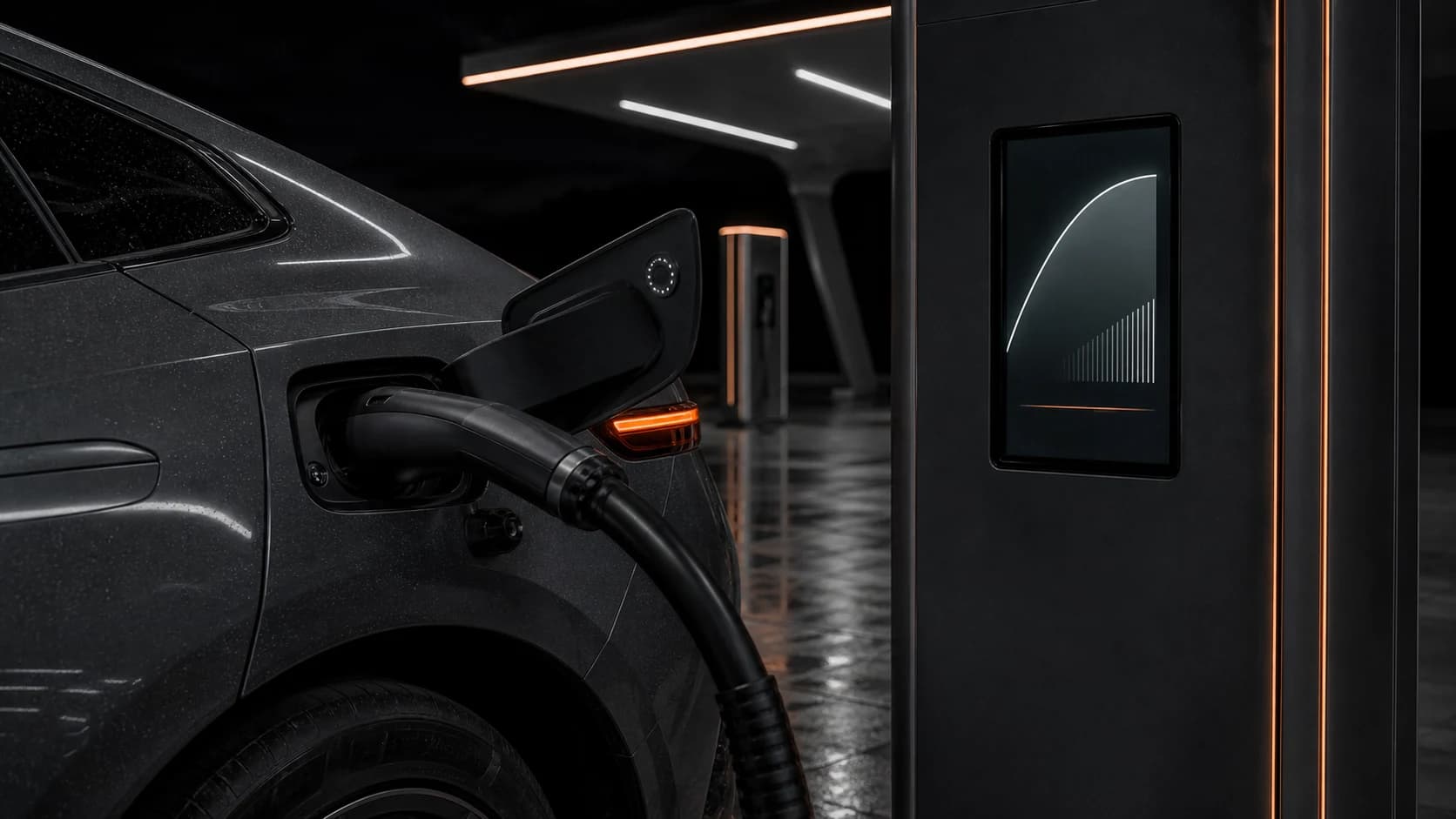
It is also why our published curves matter more than our peak figure. An Arcen holds above 200 kW from 10 to 58 percent state of charge. The peak number is 265 kW. The number that decides how long you stand at the charger is the first one.
Less copper, less mass
Lower current means thinner conductors. Across a full vehicle harness, an 800-volt architecture saves roughly 40 pounds of copper compared with an equivalent 400-volt design. Forty pounds is not dramatic on its own, but mass compounds: less mass means smaller brakes, less suspension, and less battery to move the battery.
What it costs
800 volts is not free. It requires silicon carbide semiconductors rather than cheaper silicon, better insulation throughout, and more expensive contactors. In 2011 it was hard to justify commercially, which is why the industry mostly did not. That calculation has changed, but the vehicles designed around the old one cannot be retrofitted — the architecture is decided at the first sketch.
What it does not fix
Voltage does nothing for a cold pack. A battery at 20°F charges slowly regardless of architecture, which is why preconditioning matters as much as voltage does. If you navigate to a Current site, the vehicle warms the pack on the way and arrives ready. If you drive to one without navigating, you will see a fraction of the rate you expected, and the architecture will not save you.